The architectural genius of the Catholic Church lay in the invention of the confessional box. It was a triumph of interior design: a small, dark, wooden closet where one could whisper one’s darkest deviations to a man who was professionally obligated to forget them. There was a screen. There was a separation. There was, crucially, shame. The shame was the point. It was the currency with which one purchased relief. You admitted you were a wretch, you mumbled a few prayers, and you walked out into the sunlight feeling lighter, or at least sufficiently chastised to function for another week. It was a private transaction between the sinner, the intermediary, and the void.
Today, the box has been demolished. In its place, we have erected a digital cathedral of glass, a panopticon of oversharing where the concept of a "private sin" is as obsolete as the floppy disk. We do not whisper our kinks; we broadcast them. We do not seek absolution; we seek engagement metrics. The digital confessional is open twenty-four hours a day, and the priest has been replaced by a moderator who lives in his mother’s basement in Idaho. The silence of the church has been replaced by the cacophony of the forum, where millions of people are simultaneously screaming, "Look at me! Look at what I want to do with a latex suit and a pound of industrial lubricant!"
There is something profoundly un-erotic about the way we now catalog our desires. We have turned the messy, terrifying swamp of human sexuality into a database. We use filters and tags. We search for intimacy with the same logistical mindset we use to buy a toaster on Amazon. "I am looking for a dominant male, aged 30-45, within a 10km radius, with a verified reviews score of 4.5 or higher." It is not a search for passion; it is procurement. The mystery, that vital component of desire which relies entirely on the unknown, has been murdered by the drop-down menu. We have sanitized the filth by organizing it.
A 2024 study in Computers in Human Behavior examined the phenomenon of "digital sexual self-disclosure" and found that while online anonymity encourages the revelation of "deviant" desires, it paradoxically reduces the emotional satisfaction derived from the act (Thompson & Liu, 2024). In other words, telling a stranger on the internet that you enjoy being treated like a piece of furniture does not unburden the soul. It merely adds a row of data to the server. The thrill of the confession is diluted by the sheer volume of noise. When everyone is confessing, no one is listening. We are just shouting our perversions into a canyon, listening for the echo, and mistaking it for validation.
The tragedy of the digital confessional is that it tricks us into thinking we are brave. We type out our darkest fantasies—the humiliation, the pain, the bizarre roleplay involving historical figures—and we hit "post." We feel a surge of adrenaline. But this is not courage. Courage is looking someone in the eye and saying, "I am broken." Typing it into a text box protected by a VPN and a pseudonym is not bravery; it is graffiti. We are scrawling our desires on the bathroom wall of the world, convinced that we are creating art.
The Bureaucracy of Perversion
If you spend enough time navigating the darker tributaries of the internet—Reddit threads, specialized dating apps, forums that look like they haven't been updated since 1999—you realize that kink has become hopelessly bureaucratic. There are rules. There are protocols. There are acronyms that require a glossary to decipher. The spontaneity of lust has been strangled by the red tape of "community standards." One cannot simply be a sadist anymore; one must be a "Safe, Sane, and Consensual Practitioner of D/s Dynamics." It sounds like a job title in a human resources department.
This administrative approach to sex is the inevitable result of the digital interface. Computers are binary machines; they require clear definitions. Yes or No. 0 or 1. Human desire, conversely, is a muddy, incoherent spectrum. To fit the human into the machine, we have to chop off the edges. We have to categorize ourselves. "Are you a Little? A Furry? A switch? A primal?" You must choose a team. You must wear the badge. The nuance is lost. You become a caricature of your own libido.
“We have applied the logic of the spreadsheet to the chaos of the bedroom. We believe that if we can just categorize our madness correctly, it will cease to be madness and become a 'lifestyle.' It is the ultimate delusion of the ordered mind.” — On the futility of labeling the id.
The result is a landscape of performative conformity. In these digital spaces, you are expected to perform your kink "correctly." There are tutorials. There are etiquette guides. If you are a submissive, there is a right way and a wrong way to type. If you fail to adhere to the script, you are shamed—not for the perversion itself, but for doing it wrong. The digital confessional has its own orthodoxy, its own heretics, and its own excommunications. The irony is palpable: spaces designed for the liberation of the outcast have become as rigid and exclusionary as the Victorian drawing rooms they claim to despise.
Furthermore, the specificity of these digital confessions is mind-numbing. In the old days, a fetish was a rare and frightening thing, a dark bird that visited you in the night. Now, it is a sub-genre. You can find a community of five thousand people who are sexually aroused by balloons popping. You can find a group dedicated exclusively to the erotic potential of quicksand. This proliferation of micro-kinks suggests that we are not discovering new depths of human experience, but rather fracturing into infinite splinters of boredom. We are so bored with the standard equipment of biology that we have to invent new obstacles to arousal just to feel something.
A recent analysis in the Journal of Sex Research (2023) discussed the "normalization of the niche," noting that exposure to specific paraphilias online increases the likelihood of individuals self-identifying with those labels, largely due to the "social contagion" effect of digital communities (Review of paraphilic disorders, 2023). We are catching kinks like the flu. You read a confession about something absurd, and for a moment, the brain—desperate for novelty—thinks, Why not? The digital confessional does not just reflect our desires; it manufactures them. It is a factory of synthetic lust.
Absolution by Algorithm
Why do we confess to the machine? Why do we pour our hearts out to an audience of avatars? The answer lies in the terrifying nature of solitude. The modern individual is structurally isolated. We live in boxes, we travel in boxes, and we stare at boxes. The digital confessional offers the illusion of connection without the risk of intimacy. When you post your kink online, and someone replies "Me too," you feel a momentary reprieve from the sentence of being yourself. You are validated. The algorithm has matched you with a peer. You are not a monster; you are a demographic.
But this validation is hollow. It is the validation of the echo chamber. If you are a cannibal, and you find a forum of cannibals, they will tell you that eating people is a perfectly healthy lifestyle choice and that society is just prejudiced. The internet is an engine for normalizing the abnormal. It removes the friction of moral doubt. In the physical world, if you told a friend you wanted to be locked in a cage and fed dog food, they might suggest therapy. In the digital confessional, they ask what brand of dog food you prefer.
This lack of friction is dangerous. Shame, as unpopular as it is to say, served an evolutionary purpose. It acted as a brake. It forced us to examine our impulses before acting on them. It required us to integrate our shadow selves with the expectations of the tribe. The digital world removes the brake. It allows the shadow to take the wheel. We see the results in the real world: people acting out their digital fantasies with a total disregard for the messy reality of other human beings. They treat partners like NPCs (Non-Player Characters) in their own personal video game.
The "encounters" that result from these digital arrangements are often bleak. I have heard the stories—the meeting in the hotel room, the awkward silence, the mechanical execution of the acts agreed upon in the chat log. It is not sex; it is a reenactment. Both parties are trying to recreate the JPEG they saw on the screen. They are not interacting with each other; they are interacting with the ghost of the image. The digital confessional promised us a world of limitless pleasure, but it delivered a world of limitless logistics.
“We traded the priest for the pixel, thinking we were escaping judgment. Instead, we built a prison of endless observation, where we are judged not by God, but by the number of likes on a post detailing our own degradation.” — On the false economy of digital validation.
The ultimate irony is that for all our talk of "sex positivity" and "openness," we have never been more anxious about sex. The data proves it. Gen Z is having less sex than any previous generation. The Archives of Sexual Behavior consistently reports declines in sexual frequency among young adults (Twenge et al., 2021, reconfirmed in 2024 metanalysis). We talk about it constantly. We tweet about it. We curate it. But we don't do it. We have sublimated the act into the discourse. The digital confessional has become a substitute for the deed. Why risk the awkwardness of a body when you can have the perfection of the text?
The Silence After the Send Button
There is a specific moment of despair that follows the digital confession. You have typed out your secret. You have formatted it. You have added the appropriate content warnings (CW: humiliation, feet, custard). You press send. And then... you wait. You wait for the dopamine hit of the notification. This waiting room is the modern purgatory. It is where the self disintegrates.
If the response comes, it is fleeting. A "like" lasts for a second. A comment lasts for a minute. Then the hunger returns. The digital beast is insatiable. You must confess again. You must escalate. The kink must get weirder, the story more extreme, to garner the same reaction. It is an addiction loop. We are rats pressing the lever, hoping for the pellet of attention. The content of the confession matters less than the fact of the confession itself. We are shouting "I exist!" through the medium of our genitals.
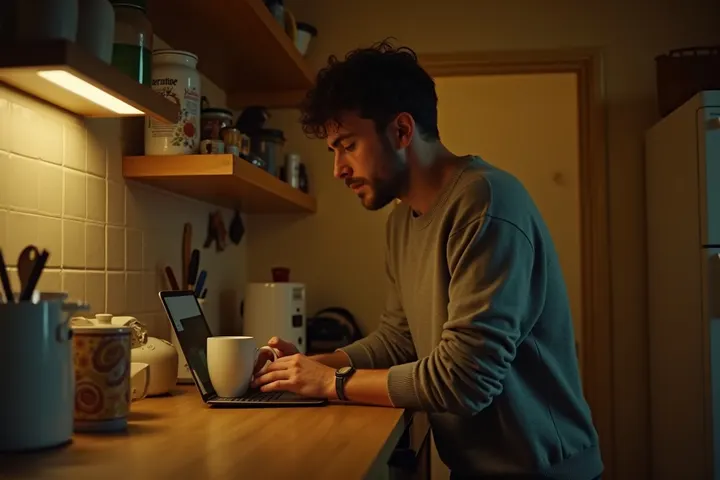
I suspect that if we could see the faces of the people typing these things, we would not see lust. We would see exhaustion. We would see the blue light of the screen reflecting in eyes that are tired of searching. The digital confessional is not a place of sin; it is a place of sadness. It is a monument to our inability to connect in the physical world. We have built a vast, intricate network of cables and servers just to avoid having to look someone in the eye and say, "I am lonely."
In the end, the old wooden box was better. It promised silence. It promised that your secrets would die with the priest. The digital confessional promises that your secrets will live forever, archived in the cloud, searchable by keywords, and monetized by advertisers. We wanted to be free of our shame, but we only succeeded in making it public property. And there is nothing less sexy than public property. The erotic requires shadows. We have turned on the floodlights, and all we can see is the dust.