There is a peculiar fantasy currently gripping the legislative bodies of Europe. It is a dry, paper-scented fantasy, born in committee rooms where the lighting is harsh and the coffee is lukewarm. The fantasy is this: that human sexuality, a chaotic, fluid, and biologically messy affair that has baffled poets and scientists for millennia, can be tamed by the rigid syntax of the law. The modern European legislator believes that the bedroom should operate much like a German train station—governed by clear signals, adhering to a strict schedule, and with zero tolerance for ambiguity. This is the era of "affirmative consent," or "only yes means yes," a legal doctrine that attempts to retrofit the chaotic dynamics of lust with the logic of a mortgage application.
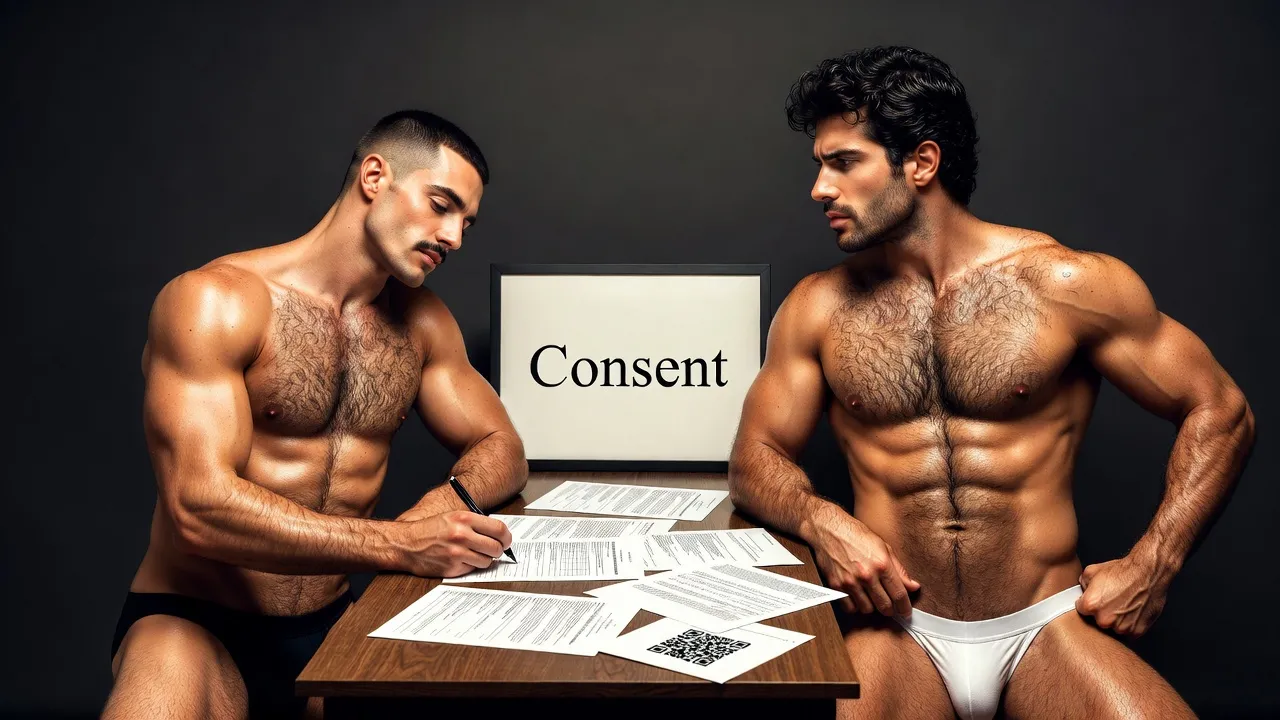
The premise is deceptively simple and morally unimpeachable: sex without consent is rape. No one disputes this, except perhaps the sociopaths who are beyond the reach of any law. However, the mechanism by which the state proposes to verify this consent reveals a profound ignorance of human nature. The law demands a "freely given, enthusiastic, and continuous" agreement. It envisions two rational actors, presumably sitting at a conference table, negotiating the terms of engagement before a single button is unbuttoned. "I propose to touch your left knee. Do you enthusiastically consent to this trajectory? Please sign here, and here, and initial the addendum regarding the use of saliva."
In practice, desire is rarely a contract; it is a conspiracy. It is a mutual descent into irrationality. The prefrontal cortex—the part of the brain responsible for logic, risk assessment, and remembering to pay your taxes—is notoriously unhelpful during sexual arousal. It effectively shuts down. We are asking people to be their most legalistic precisely when they are their most animalistic. A 2024 debate within the European Union regarding the Directive on combating violence against women and domestic violence highlighted this very fracture. While the Directive successfully criminalized forced marriage and female genital mutilation, the attempt to create a unified, EU-wide definition of rape based on "lack of consent" failed significantly. Why? Because member states like France and Germany argued that criminal law is a national competence, but beneath the legalese lay a deeper philosophical chasm: the inability to codify the precise moment a "vibe" becomes a crime (European Parliament, Directive (EU) 2024/1385, May 2024).
The result is a legal landscape that is drifting further and further away from the lived reality of its citizens. In Spain, the "Solo sí es sí" (Only Yes Means Yes) law, intended to protect women, resulted in the unintended reduction of sentences for over a thousand sex offenders due to technical loopholes—a masterclass in how bureaucratic benevolence can backfire with spectacular irony. The law assumes that clarity is the default state of human interaction. But anyone who has ever flirted knows that clarity is the enemy of seduction. Seduction thrives on the unknown, on the plausible deniability of the glance, on the tension between "maybe" and "now." To legislate the "maybe" out of existence is to legislate the spark out of the encounter.
We are creating a generation that is terrified of the gray zone, yet the gray zone is where all the interesting things happen. The law requires a binary switch—On/Off, Yes/No. Human desire is a dimmer switch, often controlled by a shaky hand in a dark room. To demand that every sexual encounter meet the evidentiary standards of a courtroom is to demand that we stop being human and start being defendants. It is a prophylactic against risk that ends up sterilizing the entire experience.
The Semantics of the Shrug
Let us examine the mechanism of communication. The law loves words. It loves "Yes." It loves "Stop." It loves recorded verbal affirmations. But studies in human communication have long established that the vast majority of our interaction is non-verbal. It is the dilation of a pupil, the quickening of breath, the closing of distance, or the freezing of a limb. In the context of intimacy, words are often the last resort, used only when the body has failed to make its point. By prioritizing verbal consent above all else, the law creates a hierarchy of evidence that places the awkward utterance above the genuine physical reality.
Consider the scenario of the "freeze response." Biology dictates that when faced with a threat or an overwhelming situation, a human might not fight or flight; they might simply freeze. A rigid "affirmative consent" law interprets silence as a lack of consent, which is legally correct but practically complex to prove in the aftermath. Conversely, consider "compliance"—going along with sex not out of desire, but out of boredom, obligation, or a desire to avoid conflict. A person might say "yes" verbally while their body screams "no." The law, in its infinite lack of wisdom, often protects the verbal "yes" while ignoring the somatic "no." We are prioritizing the contract over the intent.
“We have reached a stage where a nod is legally insufficient, but a signed affidavit is mood-killing. We are stuck in the middle, fumbling with our zippers and our clauses, hoping the jury will be lenient if we misinterpret a sigh.” — On the absurdity of legislating body language.
A recent study published in the Journal of Sex Research (2023) examined the gap between "wanted" sex and "consensual" sex. It found that a significant portion of sexual encounters among young adults are technically consensual (verbal agreement was given) but unwanted (the person did not actually desire the act). The law can police consent; it cannot police desire. It cannot mandate that you actually like what is happening to you, only that you agree to it. This distinction is vital. We are building a legal framework that settles for compliance because true mutuality is too difficult to codify. We are satisfied with the signature on the dotted line, even if the signatory is weeping internally.
Furthermore, the reliance on verbal confirmation assumes a level of assertiveness that many people, particularly young women socialized to be polite, do not possess in the heat of the moment. It is a very Protestant, Northern European view of the world: direct, spoken, and unambiguous. It crashes violently against the cultural nuances of Southern/Eastern Europe, or indeed, the universal nuance of shyness. To expect a teenager discovering their sexuality to articulate their boundaries with the precision of a tenured professor is not just optimistic; it is delusional. The law asks for a voice from those who have often been taught that their voice does not matter.
The danger lies in the retrospective analysis. A glance that felt like an invitation at 11:00 PM can look like a violation when described to a police officer at 10:00 AM the next Tuesday. The context evaporates. The alcohol, the music, the pheromones—the entire ecosystem of the encounter is stripped away, leaving only the cold, hard facts of who touched whom and when. In this vacuum, the "assumption of understanding" I mentioned earlier becomes a liability. The law does not understand "implied." It understands "proven." And since we cannot subpoena a vibe, we are left with a system that often fails both the victim (who cannot prove the absence of a yes) and the accused (who cannot prove the presence of a non-verbal yes).
The Paranoid Lover
The inevitable cultural output of this legalistic encroachment is the Paranoid Lover. This is the modern man (and it is usually a man, though not exclusively) who approaches sex not as a joyful exploration, but as a minefield of potential litigation. He is terrified. He has read the articles. He knows that his perception of a situation is legally irrelevant compared to the other person's retrospective experience of it. So, he freezes. Or, worse, he adopts the "consent app" mentality—a technological abomination that actually exists, where partners digitally "sign in" before sex.
This is the ultimate triumph of bureaucracy over biology. We are introducing a third party into the bed: the lawyer. The Paranoid Lover checks in constantly. "Is this okay? Is that okay? Can I move my hand three inches to the left?" While this sounds like the model of a respectful partner, carried to its extreme, it becomes a performance of anxiety. It places the onus of direction entirely on the other partner, forcing them to become the director of the scene rather than a participant. It kills the flow. It turns a dance into a driving lesson.
There is a cynicism in this safety-first approach. It suggests that we view our potential partners primarily as potential threats. The default setting of human interaction has shifted from "trust until given reason to doubt" to "doubt until given written permission." We are insulating ourselves against the possibility of misunderstanding, but in doing so, we are also insulating ourselves against the possibility of connection. Connection requires the risk of being misread. It requires the vulnerability of guessing. If you remove the risk of getting it wrong, you also remove the magic of getting it right without having to be told.
According to a 2024 report by the European Union Agency for Fundamental Rights (FRA), despite the tightening of laws, reporting rates for sexual violence remain low, and conviction rates even lower. The laws are changing, but the behavior is not keeping pace. Why? Because the law is a blunt instrument trying to perform brain surgery. It cannot fix the cultural scripts that teach men entitlement and women submission. It can only punish the most egregious failures of those scripts. The Paranoid Lover knows this. He knows the law is a trap, not a shield. And so he withdraws, or he consumes pornography where the consent is scripted and the risk is zero, leaving the real world to the reckless.
The Impossible Standard of the Rational Orgasm
Ultimately, the disconnect between European consent laws and human desire stems from a fundamental disagreement about what a human being is. The law views the human as a rational, autonomous agent, capable of making clear-headed decisions at all times, independent of chemical influence or emotional pressure. This is the human of the Enlightenment. It is a beautiful fiction.
The reality is that the human in the throes of desire is a mess. We are driven by hormones, insecurities, power dynamics, and the desperate need to be wanted. We agree to things we don't want because we are afraid of being alone. We initiate things we don't understand because we are bored. We misread signals because we are projecting our own fantasies onto a blank canvas. The law cannot account for the "ambivalent yes"—the yes that means "I suppose so, if it makes you stay," or the "yes" that means "I am too drunk to argue, but not drunk enough to pass out."
We are trying to impose an Apollonian structure on a Dionysian activity. It is doomed to fail. This does not mean we should not have laws; we need them to cage the wolves. But we must stop pretending that the law can domesticate the act itself. We must stop pretending that if we just find the right wording, the right definition of "affirmative," we can eliminate the inherent tragedy of sex—which is that we can never truly know another mind, and sometimes, in the dark, we hurt each other not out of malice, but out of a failure of imagination.
“We want a world where every touch is pre-approved, every desire is cataloged, and no one ever wakes up with regret. We might as well ask for a world without weather. The storm is part of the climate.” — On the futility of sanitizing the human condition.
The gap between the statute book and the bedsheet will remain. The lawyers will continue to draft their clauses, believing they are building a safer world. The lovers will continue to fumble in the dark, governed by ancient, wordless codes that predate the concept of a parliament. And somewhere in the middle, the inevitable casualties of this mismatch will continue to accumulate—people who followed the rules but lost the spark, and people who followed the spark but broke the rules. It is a comedy of errors, written by a legislator who has clearly never been in love, or at the very least, has forgotten that the best parts of life are usually the ones you can't justify in court.