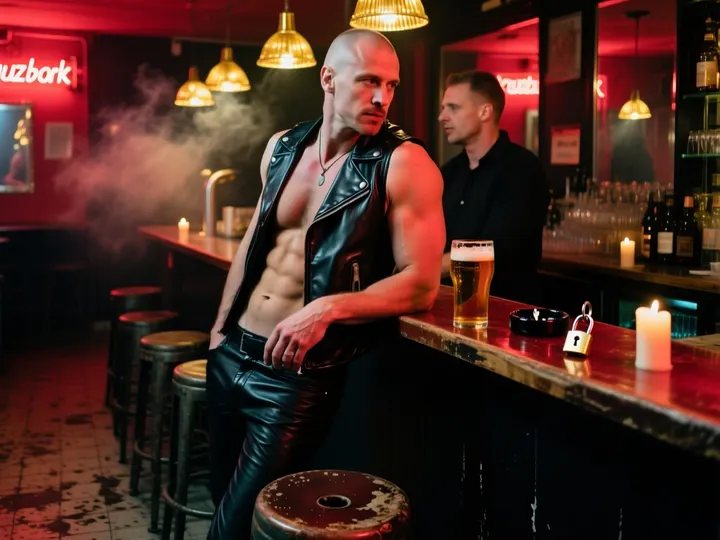
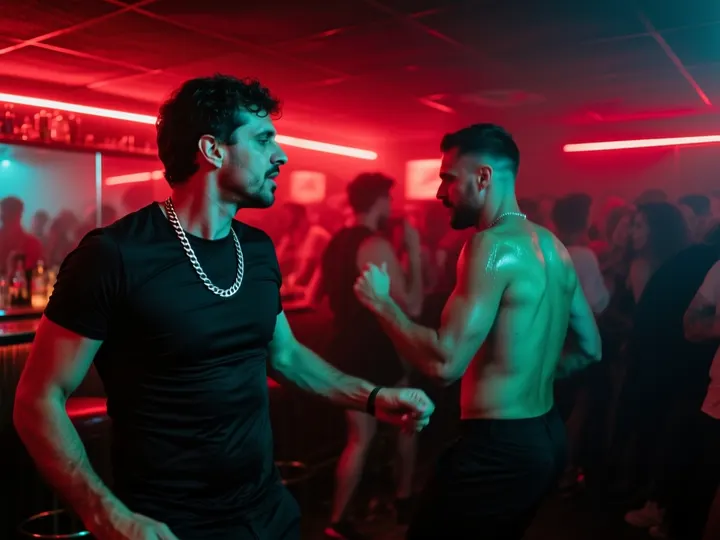
There was a time when the leather bar was a place of sensory hostility. It smelled of stale beer, industrial cleaner, unwashed bodies, and the distinct, acrid scent of cured animal hide that had been sweating in a dark room for four hours. It was a smell that triggered a primitive flight response in the uninitiated and a Pavlovian salvation in the deviant. Today, walking into a so-called "leather space" in a major European capital is an olfactory experience closer to walking into a Sephora. The air is thick with the scent of vanilla vape clouds and expensive beard oil. The danger has been scrubbed away, replaced by a sanitized aesthetic that photographs well but feels like nothing. The leather scene, once the dark, beating heart of gay masculinity, is undergoing a transformation that can only be described as a hostile takeover by the soft.
The tradition of leather was built on a foundation of exclusion. This is a heresy to say in the current climate, where "inclusivity" is the state religion, but it is a historical fact. You did not simply walk into the scene; you earned your way in. You apprenticed. You learned the codes. You understood that the leather jacket was not a fashion statement, but a piece of armor that signaled you had survived something—usually the crippling repression of the mid-20th century or the plague years of the 80s. Now, the leather jacket is a click-to-buy item on a fast-fashion website, usually made of "vegan leather," which is a polite term for plastic that will end up choking a sea turtle in ten years.
The new generation of gay men approaches leather not as a lifestyle, but as a "vibe." They treat the subculture like a costume chest. They put on the harness to go to a brunch party where they will drink mimosas and discuss their anxiety disorders. This decoupling of the signifier (the gear) from the signified (the commitment to a radical, often painful, sexuality) is the defining characteristic of the modern era. We are living in the age of the "Leather Aesthetic," where the look is mandatory, but the history is optional, and usually considered "problematic."
A 2023 sociological study on subcultural shifts in the Journal of Homosexuality noted a marked decline in "formalized mentorship" within kink communities, replaced by "peer-to-peer digital learning" (Harrison & Clarke, 2023). In plain English: nobody is teaching the young men how to behave because the young men think they already know everything because they saw a fifteen-second video on TikTok. The transmission of knowledge has been severed. The old guard sits in the corner, nursing their beers, looking at a room full of boys in neoprene who think a "Master" is just someone with more Instagram followers than them.
The leather tradition must rewrite itself, we are told. It must "modernize." But how does one modernize a tradition rooted in primal hierarchy, physical endurance, and the worship of hyper-masculinity without destroying it completely? The answer, it seems, is that you don't. You simply hollow it out, paint it in pastel colors, and pretend it’s the same building. The leather scene isn't rewriting itself; it is being gentrified. The rough edges are being sanded down to ensure that no one gets a splinter, and in the process, the structural integrity of the entire edifice is collapsing.
The Death of the Code
Consider the hanky code. It was a masterpiece of analog communication. A colored piece of fabric in a back pocket told you everything you needed to know about a stranger’s desires, limits, and preferred position, all without a single word being spoken. It was efficient, discreet, and required a certain level of commitment to the game. You had to know the language to speak it. Today, the hanky code is treated as a quaint artifact, like a rotary phone or a pension plan. Why learn the code when you can just open an app and see a grid of torsos with their preferences listed in bullet points?
The digitization of desire has rendered the physical semiotics of the leather scene obsolete. But in doing so, it has also removed the mystery. The new generation demands transparency. They want a "menu of services" before they even say hello. The idea of navigating a dark room, relying on intuition, smell, and the subtle shift of a body to determine interest, is terrifying to a generation raised on the safety of the screen. They want the aesthetic of the dungeon, but they want the safety protocols of a nursery school.
This shift is most visible in the collapse of hierarchy. The leather scene was traditionally structured around the mentorship model—Master and boy, Daddy and son. These titles were not just roleplay; they were indications of experience and responsibility. The Elder was expected to guide the Younger, to teach him the history, the safety, and the ethics of the tribe. In the new world, hierarchy is viewed with suspicion. It is seen as "toxic" or "exclusionary." Everyone is valid; everyone is an expert. The result is a flat structure where wisdom is indistinguishable from noise.
“We have replaced the rigorous apprenticeship of the guild with the instant gratification of the influencer. The leather jacket used to mean you had earned your stripes. Now it just means you have a credit card and a lack of imagination.” — On the devaluation of symbols.
The friction between the generations is palpable. The old guard views the new kids as tourists—disrespectful, loud, and glued to their phones. The new kids view the old guard as relics—problematic, gatekeeping, and obsessed with outdated binaries. And they are both right. The old world was often abusive and exclusionary; the new world is often shallow and narcissistic. But the tragedy is that the "tradition" of leather cannot survive without the discipline that the new generation rejects. Without the discipline, it is just fetish wear. It is just heavy polyester.
A recent article in Sexualities (2024) discussed the "mainstreaming of kink," arguing that as BDSM practices become more visible in pop culture, they lose their subversive power (Weiss & Herbenick, 2024). This is the crux of the matter. Leather was a rebellion against the sanitized, heterosexual world. Now, you can buy a harness at a high-street fashion retailer. When the tools of the underground are sold in the mall, the underground ceases to exist. It becomes a theme park. The tradition is not rewriting itself; it is being sold as a souvenir.
Polyester Dreams and Vegan Nightmares
Let us talk about the material. Leather is skin. It is the cured hide of a dead animal. It is heavy, it restricts movement, it makes you sweat, and it requires care. It must be cleaned, oiled, and broken in. It has a memory. It takes the shape of the wearer over years of use. It is a relationship. The new generation, however, prefers materials that require no commitment. Neoprene. Spandex. "Vegan Leather." Materials that can be thrown in the washing machine and forgotten.
This shift from the organic to the synthetic is the perfect metaphor for the spiritual degradation of the scene. Leather is visceral. It connects you to the animal nature of sex. It smells of the barnyard and the tannery. Plastic smells of the factory. The new generation wants the look of the animal without the reminder of the slaughterhouse. They want a "cruelty-free" dominance, a concept that is philosophically incoherent. Dominance is inherently about the imposition of will; it is not a democracy. But try explaining that to a twenty-two-year-old who thinks misgendering a puppy is a hate crime.
The aesthetic of the new leather scene is often referred to as "gear" rather than leather. "Gear" is inclusive. "Gear" includes the puppy hoods, the wrestling singlets, the football kits. It is a democratization of the fetish. While there is nothing inherently wrong with a wrestling singlet—if you enjoy looking like an overgrown toddler—it dilutes the visual language. The leather bar used to be a sea of black cowhide, a monolithic display of somber power. Now it looks like a collision between a circus and a sporting goods store. The visual unity, which created the feeling of a tribe, is gone.
The iconic Finnish artist whose drawings defined the post-war gay aesthetic—let us not name him, but we know the bulging biceps and the peaked caps—created a fantasy of the Hyper-Male. It was a reaction to the stereotype of the effeminate, weak homosexual. It was a reclamation of power. The new generation, conversely, is deconstructing masculinity. They mix the harness with nail polish, the combat boots with glitter. They are "queering" the leather. From an academic standpoint, this is fascinating. From a traditionalist standpoint, it is baffling. If you deconstruct the symbol of hyper-masculinity enough, eventually you are just left with a pile of confusing accessories.
The refusal to commit to the hardship of the material is a refusal to commit to the hardship of the life. Leather is hot. It is uncomfortable. It chafes. That is the point. You endure the discomfort to project the image. The new generation wants the image without the chafe. They want the "look" of a tough guy, but they want the tactile experience of wearing pajamas. It is the logic of the leisure class applied to the dungeon.
The Museum of Deviance
The future of the leather tradition in Europe seems destined for the museum. We are already seeing it. The great leather festivals—Folsom Europe in Berlin, Darklands in Antwerp—are becoming less like gatherings of a secret society and more like Comic-Con for perverts. There are tickets, corporate sponsors, and branded merchandise. The wildness is managed. The danger is insured. The tradition is being preserved, but in formaldehyde.
The new generation will inherit the structures, but they will not inherit the spirit, because the conditions that created that spirit no longer exist. You cannot manufacture the solidarity of the oppressed when you are no longer oppressed in the same way. The leather scene was a war room. Now it is a rec room. And while we should be grateful that we no longer need a war room, we should have the honesty to admit that the rec room is incredibly boring.
Technology has played the final hand. The "cruising" aspect of the leather scene—the silent hunt—has been replaced by the geolocation algorithm. Why stand in a dark corner looking intimidating when you can sit on a sofa and send a "woof" tap? The new generation lacks the patience for the hunt. They want the delivery. This efficiency kills the eroticism. Eroticism lives in the delay, in the uncertainty, in the possibility of rejection. The app removes the delay and filters out the rejection. It turns the encounter into a transaction.
“We are watching the transformation of a lifestyle into a lifestyle brand. The leather is no longer a second skin; it is just packaging. And like all packaging, it is destined for the landfill once the product inside has been consumed.” — On the commodification of the subculture.
Ultimately, the leather scene will not rewrite itself; it will simply fade away, replaced by something that looks like it but tastes like nothing. The old men will die, taking their stories and their codes with them. The young men will inherit the bars, install brighter lights, and turn down the music so they can hear themselves talk about their feelings. They will wear their vegan harnesses and feel very brave. And the ghosts of the past, the men who wore leather as armor against a world that wanted them dead, will look on with the dry, cynical amusement of those who know that everything, eventually, turns into a joke.
The tradition is not evolving; it is evaporating. We are left with the shell of the beetle, perfect and shiny, but the insect inside has long since dried up and blown away. It is a common fate for all revolutions. They start with fire and end with a gift shop. The leather scene is currently stocking the shelves.